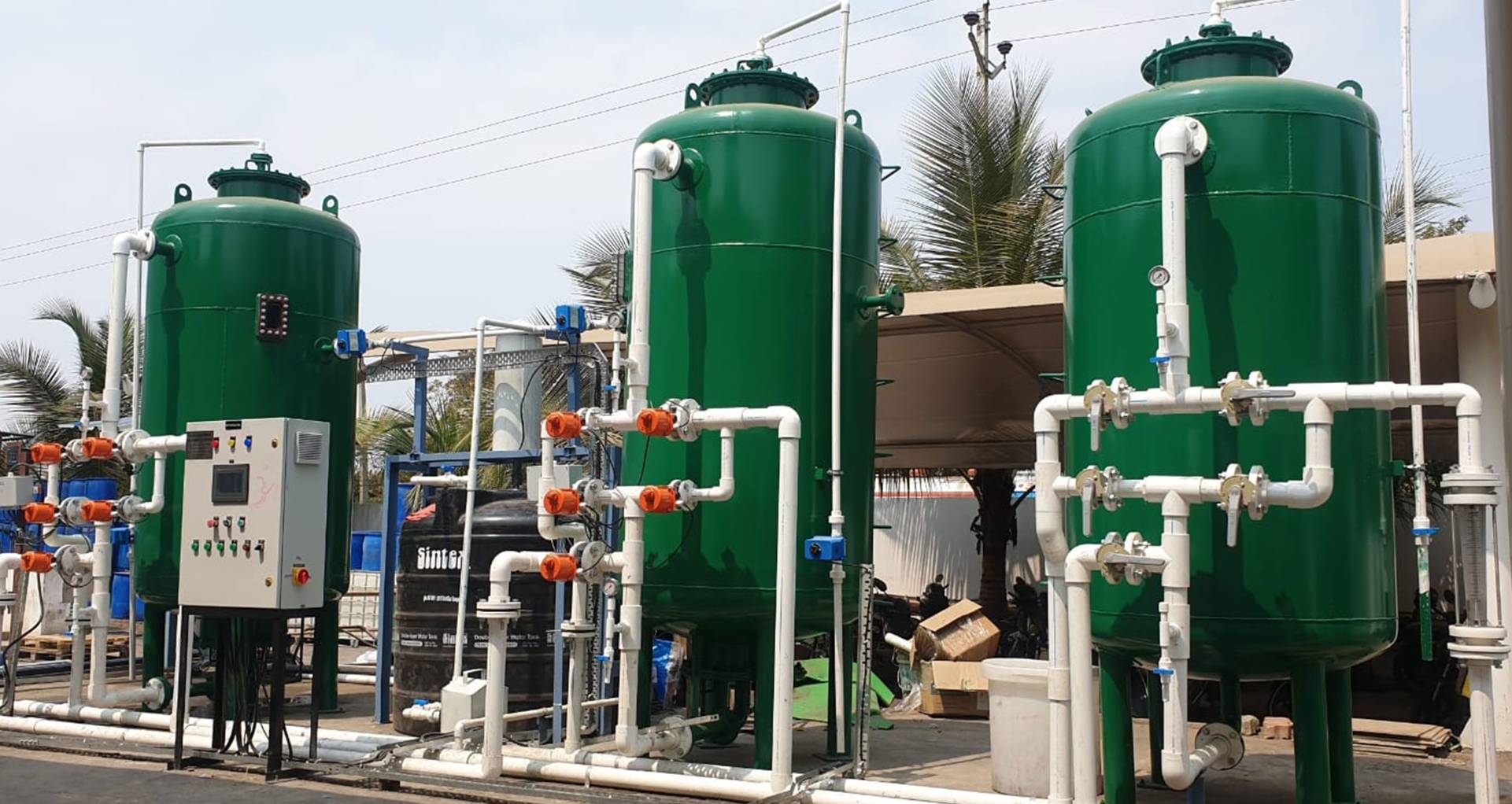
Softner
A softener (or water softening plant) is a type of Water Treatment Unit designed to remove hardness-causing minerals—mainly calcium (Ca²⁺) and magnesium (Mg²⁺) ions from water. Hard water can cause scaling in pipelines, boilers, cooling towers, and industrial equipment, reducing efficiency and lifespan. A softener typically works through the ion exchange process, where hard water passes through a resin bed containing sodium (Na⁺) or potassium (K⁺) ions. The resin exchanges these sodium or potassium ions with the calcium and magnesium ions in the water, thereby "softening" it. Once the resin becomes saturated with hardness ions, it is regenerated with a brine (salt) solution, restoring its capacity. Softened water is widely used in boilers, cooling systems, textiles, food processing, and other industries, as well as in domestic applications to prevent scaling in household appliances. While softeners effectively control hardness, they do not remove dissolved salts, heavy metals, or microorganisms—so they are often used as a pre-treatment step before advanced processes like RO or UF.