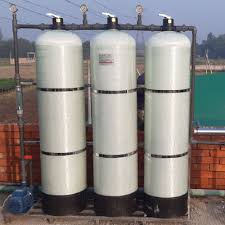
Iron
An Iron Removal Plant (IRP) is a type of Water Treatment System specifically designed to remove excess iron (Fe²⁺/Fe³⁺) and sometimes manganese from water, which are common problems in groundwater sources. High iron content causes reddish-brown staining, foul taste, bad odor, and scaling in pipelines and industrial equipment, and it can also promote bacterial growth. The process usually involves oxidation and filtration. In the first step, dissolved ferrous iron (Fe²⁺) in water is oxidized into ferric iron (Fe³⁺) using air (aeration), chlorine, or other oxidizing agents. The ferric iron then forms insoluble particles (rust-like flakes). In the second step, these particles are removed through filtration units filled with media such as manganese dioxide, Birm, greensand, activated carbon, or sand-gravel layers. In some systems, pressure filters or multi-stage filtration is used for higher efficiency. Iron Removal Plants are widely used in municipal water supply, tube wells, and industries like textiles, food processing, pharmaceuticals, and power plants, where clean water without iron is essential. They are effective, simple to operate, and relatively low-cost, but the filter media requires periodic backwashing and regeneration to maintain efficiency.