DM
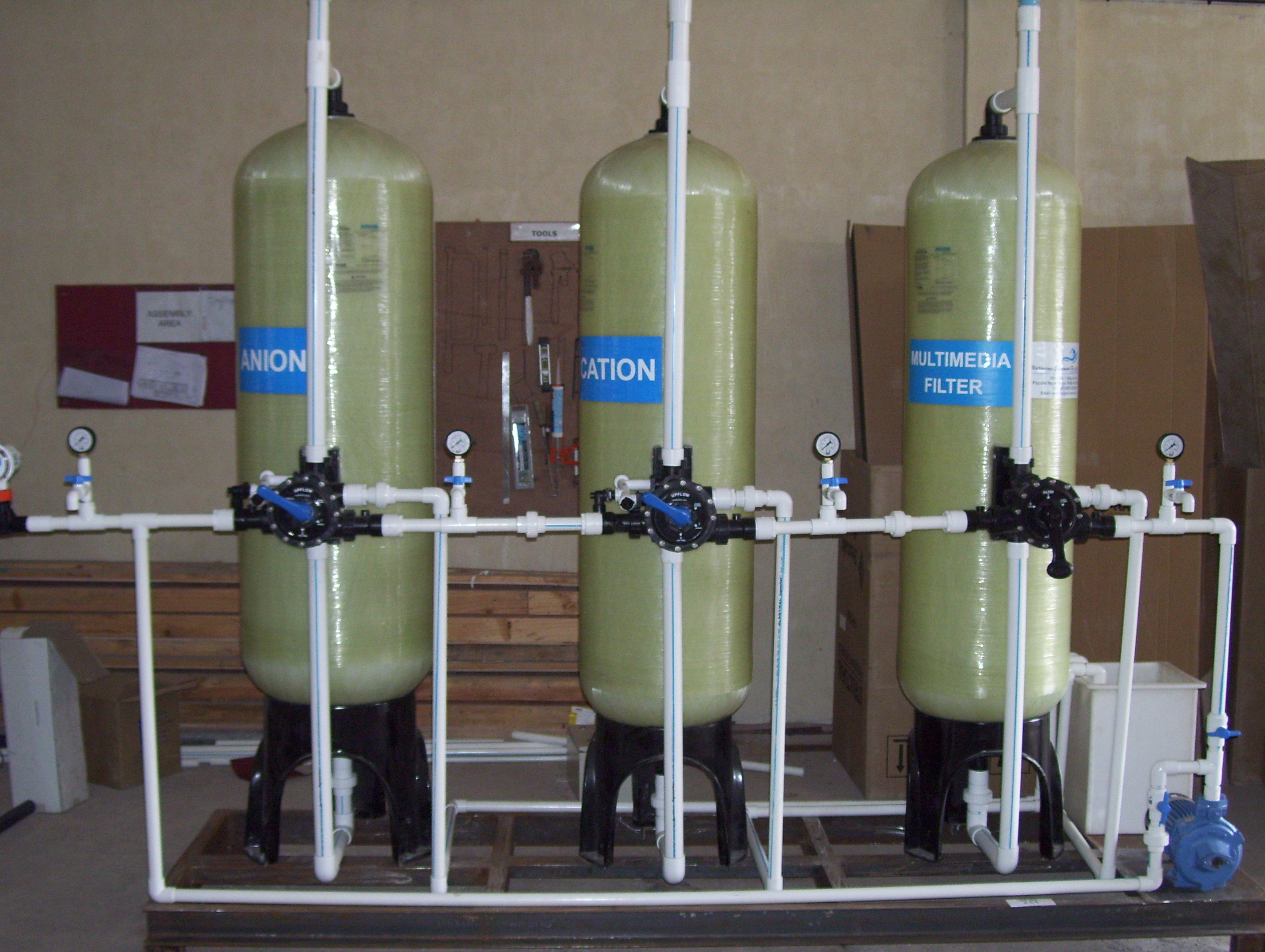
A De-mineralization Plant (DM Plant) is a water treatment system designed to remove all dissolved minerals, salts, and ions from water, producing high-purity or “demineralized” water. This is usually achieved using a combination of cation and anion exchange resins. In the process, the water first passes through a cation exchanger, where positively charged ions like calcium (Ca²⁺), magnesium (Mg²⁺), and sodium (Na⁺) are replaced with hydrogen ions (H⁺). Then it flows through an anion exchanger, where negatively charged ions like chloride (Cl⁻), sulfate (SO₄²⁻), and bicarbonate (HCO₃⁻) are replaced with hydroxyl ions (OH⁻). The H⁺ and OH⁻ ions combine to form pure water (H₂O), effectively removing the dissolved salts. De-mineralized water is widely used in boilers, power plants, pharmaceuticals, food and beverage industries, and laboratories, where high-purity water is essential to prevent scaling, corrosion, and contamination. The plant requires periodic regeneration of the resin beds with acid and alkali solutions to restore their ion-exchange capacity. While highly effective at producing pure water, DM plants do not remove suspended solids or microorganisms, so pre-treatment (like filtration or softening) is usually necessary.